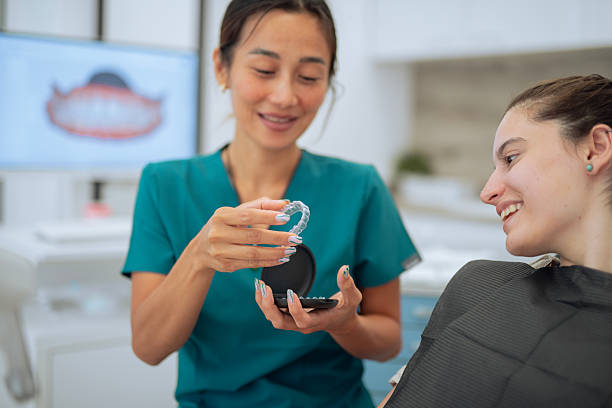
IPR, or interproximal reduction, is a technique used in some Invisalign cases to create a small, carefully planned amount of space between neighboring teeth. It involves removing a small amount of enamel—the hard outer layer of a tooth—from selected surfaces where adjacent teeth meet.
When teeth are crowded, there may not be enough room within the dental arch, the curved row of teeth, for them to align properly. Invisalign aligners apply gentle, controlled pressure to move teeth, but certain movements require additional space. IPR provides that space in specific locations, helping teeth move toward their planned positions.
Not every Invisalign patient needs IPR. Whether it is appropriate, which tooth surfaces are treated, and how much enamel is removed depend on individual tooth anatomy and the treatment plan. The space is intended to be used as teeth move into alignment, rather than remain as the finished result.
For patients considering Invisalign in Danville, CA, Blackhawk Dental Care can explain how this small step may fit into their personalized care.
IPR stands for interproximal reduction, the controlled removal of a very small, planned amount of enamel between adjacent teeth. In Invisalign treatment, its purpose is space creation: making room for teeth to move into the positions identified in the orthodontic plan.
IPR targets selected proximal tooth surfaces, the sides of teeth that face neighboring teeth. A contact point is the area where two neighboring teeth touch. By carefully reducing enamel at selected contact areas, your dentist creates space that the aligners can use as they gradually reposition your teeth.
This treatment focuses on the surfaces between teeth rather than reducing their visible front surfaces. The locations and amounts are planned for your individual smile.
The name describes both where the treatment happens and what it involves:
Together, these terms describe a precise adjustment to the enamel between teeth. Although each adjustment may measure only a fraction of a millimeter, space created at several selected contacts can contribute to the room needed for planned tooth movement.
The main difference is the purpose and location of the adjustment. IPR manages orthodontic space by modifying selected surfaces between neighboring teeth so the aligners have room to move them.
Cosmetic contouring changes a tooth’s visible shape, such as smoothing an uneven edge, to improve its appearance. IPR is planned around how teeth need to move and fit together during treatment, rather than how an individual tooth looks.
Dental crowding occurs when the available arch space is insufficient for the desired positions of the teeth. Clear aligners can guide tooth movement, but the treatment plan must also account for where each tooth will fit and how it will get there.
Depending on your needs, space management may involve using natural existing gaps, moving teeth to make room elsewhere, or carefully broadening the dental arch where clinically appropriate. Arch development or expansion depends on factors such as age, jaw structure, and the supporting tissues. IPR may provide smaller amounts of additional space, while tooth extraction may be considered in selected cases with greater space requirements.
IPR is one tool within this planning process. Whether it belongs in your Invisalign treatment depends on the space needed and the movements being planned.
Crowded teeth may overlap, rotate, or sit in front of or behind the rest of the row. These positions can reflect a mismatch between the combined widths of the teeth and the available arch perimeter, the distance along the curve of the dental arch.
A rotated tooth, for example, may need additional clearance between neighboring teeth as it turns into alignment. An overlapping tooth also needs room to move into the row. Without sufficient space, neighboring teeth can limit those planned movements.
Your dentist evaluates both the room needed for the finished alignment and the space required along the way.
Orthodontic planning works in small measurements. A fraction of a millimeter at one contact may seem insignificant, but planned space creation across several selected contacts can contribute to the total room needed for alignment.
IPR creates that clearance; the aligners then apply the forces that move teeth into the available space. As treatment progresses, the space is used by the planned tooth movements.
The amount and distribution vary by patient. Some plans may call for small adjustments at a few contacts, while others use a different combination of space-management methods.
Two people with visibly crowded teeth may need different approaches. Your dentist considers the amount of crowding, tooth shape, arch dimensions, bite, existing space, and the direction of each planned movement.
Some patients already have usable space elsewhere in the arch. Others may gain sufficient room through planned tooth movement without enamel reduction. For certain patients, carefully selected IPR helps address the remaining space requirement.
This is part of why Invisalign treatment is personalized. At Blackhawk Dental Care, planning Invisalign in Danville involves evaluating how your teeth need to move and which approach to space management fits your individual smile.
IPR creates space; the aligner supplies the planned force that moves teeth into that space. Interproximal reduction itself does not straighten teeth. Instead, it adjusts selected contact areas between neighboring teeth so certain movements have the clearance they need.
Digital treatment planning connects space creation with the movement sequence, the order in which teeth are intended to move. Your dentist determines where additional room is needed, how much IPR is appropriate, and when that space should become available. Each aligner is designed for a particular step in that sequence.
Creating the prescribed space helps support the planned movement and aligner fit. Your dentist also checks how the aligners seat against your teeth and whether treatment is progressing as expected.
Seeing a small space between teeth after IPR can understandably raise questions. That space has a purpose within the treatment plan: it provides room for teeth to change position.
As teeth move into alignment, they use the space created by interproximal reduction. The intended result is for neighboring teeth to come together in their planned positions, rather than leave permanent gaps from IPR.
How quickly a space becomes less noticeable depends on its location and the movements scheduled next. Your dentist monitors those changes throughout treatment.
A crowded tooth may need room to rotate, move out of an overlapping position, or align beside its neighbors. IPR can reduce interference at selected contact points, allowing the aligners to guide those movements.
The aligners apply controlled forces in small steps. Space creation supports those steps by providing clearance where the treatment plan calls for it. The amount of space and the direction of movement work together toward crowding correction and the planned alignment.
Staging means organizing tooth movements into steps across the aligner sequence. A digital plan may call for IPR at a particular stage because that is when additional space is needed.
For example, initial movements may improve access to a contact area before IPR is performed. The next aligners can then use the newly created space for further rotation or alignment.
This is why IPR may be completed at the beginning, later in treatment, or across more than one visit. Its timing follows the planned movement sequence and your dentist’s assessment of how your teeth are responding.
IPR is generally well tolerated and is not expected to cause pain when the planned reduction stays within enamel. Enamel, the hard outer surface of a tooth, contains no nerves. However, you may notice pressure, vibration, or unfamiliar sounds during the procedure, and some patients experience temporary sensitivity afterward.
Your comfort matters throughout the appointment. If you feel pain or discomfort, let your dentist know so they can pause and assess what you are feeling.
You may feel gentle pressure or a rubbing sensation as your dentist works between selected teeth. Depending on the instrument used, you may also notice vibration or hear a light scraping or buzzing sound. These sensations can feel unfamiliar without necessarily being painful.
Afterward, the treated contacts may feel slightly different when you floss because there is more room between those teeth. Some patients also notice temporary sensitivity to hot or cold foods and drinks. Tell your dentist if sensitivity persists, worsens, or interferes with eating and drinking.
If you feel anxious about IPR, asking your dentist to explain the sensations beforehand can help you feel more prepared.
IPR involves a small, controlled adjustment to the outer enamel between neighboring teeth. It is intended to remain within that layer.
Cavity treatment removes decayed tooth structure, which may extend beneath enamel into dentin, the underlying layer that can transmit sensations toward the tooth’s nerve. Deeper inside the tooth is the pulp, the soft tissue containing nerves and blood vessels.
Because planned IPR works within enamel rather than these deeper sensitive structures, numbing is often unnecessary. Your dentist will assess your teeth and comfort needs before proceeding.
IPR permanently removes a small amount of enamel, but properly planned treatment is designed to preserve sufficient enamel to protect the tooth. The amount matters: controlled, limited reduction is different from removing more enamel than a tooth can reasonably accommodate.
Enamel thickness, the depth of the tooth’s protective outer layer, varies between teeth and between surfaces of the same tooth. Individual anatomy, existing wear, and dental health therefore influence whether IPR is appropriate and how much reduction can be planned.
Enamel does not grow back after removal. This makes professional planning, precise measurement, and ongoing oral hygiene essential parts of the process.
Protection begins before the procedure, with a predetermined treatment plan identifying the contacts to be treated and the space required at each location. Your dentist evaluates whether the selected surfaces are suitable for that reduction.
During IPR, controlled technique and measuring gauges help your dentist check the space created against the prescribed amount. The goal is to create the planned clearance while preserving the remaining tooth structure.
Finishing and polishing help smooth the treated proximal surfaces. This matters because rough surfaces can retain plaque more readily. Your dentist may also recommend fluoride to support the remaining enamel, depending on your individual needs.
Clinical studies have generally not found higher cavity rates on professionally treated IPR surfaces compared with untreated surfaces. However, the evidence has limitations, and those findings do not guarantee that an individual patient will remain cavity-free.
The proximal surfaces, the sides facing neighboring teeth, still need daily cleaning. Plaque—a sticky film of bacteria—can collect between teeth and produce acids that weaken enamel. Thorough brushing with fluoride toothpaste and daily flossing help protect these areas throughout Invisalign treatment.
Fluoride supports remineralization, the replacement of minerals lost from the remaining enamel; it does not regrow the enamel removed during IPR. Your dentist may recommend additional fluoride based on your cavity risk.
Regular dental visits also allow your team to monitor the treated contacts, check for early decay, and help you maintain effective cleaning as your teeth change position.
IPR and tooth extraction can both create orthodontic space, but they serve different needs within a treatment plan.
Interproximal reduction creates small amounts of space at selected contacts by removing a limited amount of enamel between neighboring teeth. Extraction removes an entire tooth, creating substantially more space in a particular location. That changes both the amount of room available and the way the remaining teeth must move to achieve the planned alignment and bite.
Neither approach is universally preferable. The decision depends on how much space is needed, where it is needed, and how the teeth can be positioned within their supporting bone and gum tissues.
When the space shortage is relatively limited, small adjustments distributed across several contacts may provide enough additional room for planned movements. IPR may also work alongside other space-management methods rather than supply all the space on its own.
This can be relevant to some mild or moderate crowding situations, but those descriptions alone do not determine suitability. Tooth shape, available enamel, existing spacing, and the intended movements all influence whether controlled enamel reduction can meet the treatment plan’s needs.
More complex crowding may involve a larger space shortage, teeth positioned too far forward, or bite relationships that require broader correction. Creating small spaces between teeth may not adequately address those concerns.
Your dentist must evaluate the full bite, tooth positions, jaw relationships, and supporting tissues before recommending an approach. Selected cases may require extraction or another orthodontic strategy to provide appropriate space and control tooth movement.
For patients considering orthodontics in Danville, a professional evaluation helps explain why a particular approach fits their anatomy and treatment goals. The aim is to create the right amount of space in the right locations for the overall plan.
The amount of visible crowding is only part of IPR planning. Tooth width, shape, and the way neighboring teeth touch also influence where space can be created and how much enamel reduction is appropriate.
Proximal contacts are the places where adjacent teeth meet. Although often called contact points, they are usually small contact areas rather than single dots. Their size and location vary with tooth anatomy and alignment.
Two patients with similar-looking crowding may therefore receive different IPR prescriptions. One may have tooth shapes that allow useful space creation through limited reduction at selected contacts, while another may have different enamel thickness or contact anatomy that calls for a different approach.
Some teeth have a more triangular outline: they are wider near the biting edge and narrower toward the gumline. These teeth may meet their neighbors at relatively small contact areas. Other teeth have more parallel sides and broader areas of contact.
These differences affect how much space a small adjustment can create and how the neighboring surfaces will fit together afterward. A narrow contact area does not automatically mean a tooth needs IPR, and a broader contact does not automatically rule it out.
Your dentist considers the tooth’s overall width, available enamel, and contact shape alongside the space required for movement. The goal is to create useful clearance while preserving appropriate tooth structure and final contacts.
When teeth overlap or rotate, they may touch their neighbors at an angle or at a different location than they will after alignment. As the aligners reposition them, those relationships change: different parts of the proximal surfaces may come together.
IPR planning therefore considers both the current contacts and how the teeth are expected to meet in their final positions. In some cases, initial movement makes a contact easier to assess or access before the planned reduction is performed.
This helps explain why IPR is prescribed for specific locations and stages rather than applied evenly across every tooth.
After IPR, your dentist checks the treated contacts and the space created, then places or reinserts the appropriate aligners. Depending on your treatment stage, you may continue with your current trays or move to the next set as directed.
The aligners then apply the planned forces that guide teeth into the available space. At follow-up visits, your dentist monitors tooth movement, aligner fit, and how the space is being used.
Small spaces may sometimes be noticeable after interproximal reduction. Their visibility depends on the amount and location of the planned space, your tooth shapes, and the stage of treatment.
These spaces are incorporated into the orthodontic plan so teeth have room to move. They are intended to decrease as the scheduled movements occur, though some may remain visible longer than others. Your dentist can explain what to expect at the specific contacts treated.
Each aligner supports a step in the movement sequence. Through controlled force, the trays guide selected teeth to rotate, shift, or move into alignment, gradually using the space created by IPR.
Your dentist checks tracking, meaning how closely your teeth are following the planned movements and fitting within the aligners. Space creation supports those movements, but progress still depends on your teeth’s biological response and consistent aligner use.
If an aligner no longer seats fully or a space is not changing as expected, let your dental team know so they can assess your progress.
IPR makes room for movement, but the aligners must be worn as prescribed to supply the forces that use that room. Inconsistent wear can slow progress and affect how well subsequent trays fit.
Follow your dentist’s instructions for daily wear and when to change aligners. Consistent use and scheduled monitoring help keep space creation and tooth movement working together throughout treatment.
IPR may be recommended when an Invisalign plan requires small amounts of additional space at selected contacts. That decision involves more than whether teeth look crowded. Your dentist considers tooth proportions, available arch space, the bite relationship, and the desired final alignment.
The question is whether controlled enamel reduction can appropriately support the planned movements while preserving sufficient enamel. For patients considering Invisalign in Danville, CA, an evaluation at Blackhawk Dental Care helps determine how space creation fits into their individual treatment.
Your dentist can often identify a likely need for IPR before treatment begins through a clinical examination, digital scanning, and treatment planning.
The examination assesses your teeth, enamel, gums, and bite. Digital scans provide a detailed model of tooth dimensions and positions. Your dentist then uses the proposed movement sequence and final alignment to determine where additional space may be needed.
Together, these steps help establish whether IPR is appropriate, which contacts may be treated, and when it may be performed. Your dentist also checks progress during treatment to confirm that the planned approach remains suitable.
Similar-looking smiles can have different space requirements. Differences in tooth width, enamel thickness, arch dimensions, and bite can affect both the amount of room needed and the options for creating it.
One patient may need IPR at a few selected contacts, while another may have enough space through existing gaps or other planned movements. Even when both patients need IPR, the locations, amounts, and timing may differ.
As our article on personalized Invisalign treatment explains, each plan reflects the patient’s anatomy and treatment goals. Someone else’s experience can help you know what questions to ask, but your own evaluation determines what your smile needs.
No, IPR is used in selected Invisalign cases when planned movements require additional space, often to address crowding. Each Danville Invisalign patient receives an individual evaluation, and the treatment plan determines whether interproximal reduction is appropriate.
The space created by IPR is intended to be used during planned tooth movement rather than remain as permanent gaps. Clear aligners gradually reposition teeth according to the orthodontic sequence, and your dentist monitors how those spaces close.
IPR is generally well tolerated because controlled reduction targets proximal enamel, which contains no nerves, rather than the deeper dental pulp that contains nerves and blood vessels. You may notice pressure or vibration, and some patients experience temporary sensitivity afterward.
IPR permanently removes a small, planned amount of enamel, but it is designed to preserve sufficient enamel to protect the tooth. Individual treatment planning and controlled technique guide the reduction, while good oral hygiene supports tooth health afterward.
If you are uncomfortable with IPR, discuss your concerns with your provider before proceeding so you understand its purpose and any suitable alternatives. Omitting prescribed IPR may require changes to the treatment plan and could affect the alignment or bite goals achievable with that approach.
Your Invisalign provider evaluates your anatomy through a clinical examination and digital scans that capture tooth positions and dimensions. Crowding analysis identifies space requirements, and the treatment plan specifies whether IPR is needed, where it should occur, and how much space to create.
Understanding why your teeth need additional room can make your Invisalign plan feel clearer. Your level of crowding, tooth anatomy, and digital treatment plan help determine how that space should be managed—and whether IPR has a role in your care.
At Blackhawk Dental Care in Danville, CA, personalized Invisalign treatment starts with evaluating your smile and explaining the recommended approach. Whether you are considering clear aligners or have questions about IPR in an existing treatment plan, schedule a consultation to discuss where space is needed, how it will be created, and how it supports your treatment goals.