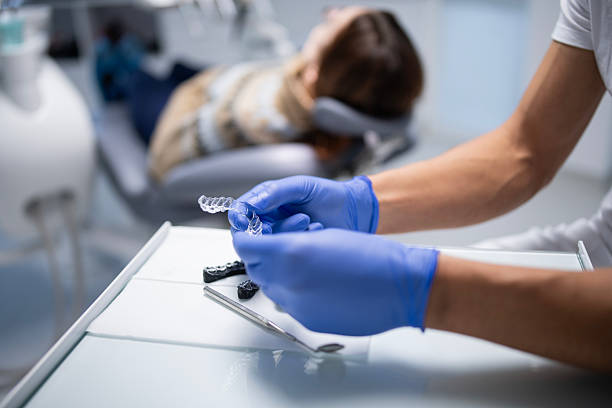
Many adults with crowns, bridges, or dental implants can still be considered for Invisalign, but each restoration affects treatment differently. At Blackhawk Dental Care in Danville, CA, an evaluation can help you understand how your existing dental work fits into your goals for a straighter smile.
A crown covering a natural tooth can often move with the tooth underneath it. A fixed bridge connects teeth, which can restrict their independent movement. An integrated dental implant stays fixed in bone, although natural teeth around it may still be moved. These differences matter when planning both the path of treatment and the final bite.
Before recommending aligners, your provider needs to assess the type, location, condition, and support of each restoration. Gum health, bite relationships, attachment placement, and the intended final tooth positions also shape the decision. If you are considering Invisalign in Danville, CA, the useful starting point is to identify which teeth need to move and whether your dental work allows those movements. The following guide explains what that means for each restoration.
Possibly. Existing dental work does not automatically disqualify you from Invisalign treatment in Danville. The key is understanding what each restoration is attached to, whether its supporting teeth can move independently, and whether it will remain compatible with your planned alignment.
Two teeth can look similar above the gumline while having very different foundations. One crown may cover a natural tooth with its root intact. Another may sit on an implant replacing the root entirely. A bridge may join several teeth into one connected restoration.
Identifying those foundations helps the provider distinguish movable natural teeth from fixed implants and connected structures.
Restorations can influence attachment placement, available space, bite contacts, and which teeth provide resistance against unwanted movement. The provider may modify the movement sequence or limit particular movements to protect the overall plan.
Not every crown creates a major complication. The significance depends on whether that restoration is directly involved in the correction and how securely it is supported.
An intact crown does not establish that the tooth beneath it is healthy. Active decay, root problems, gum inflammation, or inadequate bone support can affect candidacy independently of the restoration.
Your provider also evaluates hygiene and any history of periodontal disease. These findings help determine whether dental treatment is needed first and whether the planned movement is suitable for the remaining support.
Yes, a crowned natural tooth may be moved when its root, supporting tissues, and restoration are suitable. The crown covers the visible portion of the tooth; it does not replace the biological structures that allow movement. The condition and material of your dental crowns still require consideration.
The tooth root is connected to surrounding jawbone by a thin layer of tissue called the periodontal ligament. Orthodontic forces act through this ligament, triggering bone remodeling around the root as the tooth changes position.
When movement is appropriate, the crown and underlying tooth move together. The aligner is not shifting the crown separately or sliding it over the tooth.
Crowns may be made from porcelain, zirconia, other ceramics, metal, or porcelain fused to metal. These materials differ in their surface characteristics and mechanical properties.
Material can influence attachment bonding, how a surface is prepared, and how the restoration is handled or adjusted. No single material automatically rules out Invisalign. If you do not know what your crown is made from, previous dental records may help.
Sometimes. Invisalign attachments are small composite shapes that help aligners grip selected teeth and direct forces. Bonding them to a crown may require a different approach from bonding to enamel.
Your provider considers the restorative material, surface preparation, retention, and eventual removal. If a reliable attachment cannot be achieved, another attachment arrangement, movement strategy, or appliance may be considered.
Restorations can become dislodged during aligner treatment and may need recementing or replacement. That possibility does not mean damage is inevitable, but it makes pretreatment assessment important.
A poorly fitting crown, existing fracture, weakened underlying tooth, or retention problem needs attention. Bite forces and attachment placement or removal also warrant consideration. Report a crown that feels loose, sharp pain when biting, or a newly changed fit rather than assuming it is ordinary orthodontic pressure.
Not necessarily. A sound crown may remain serviceable after treatment. However, its shape and contacts were established for an earlier tooth arrangement.
If the final alignment leaves unsuitable contacts, inadequate clearance, or a shape that no longer fits the restorative goals, adjustment or replacement may be considered. Your provider should discuss foreseeable restorative needs before treatment so you can understand the likely scope of care.
A bridge can make treatment more complicated because it connects structures that aligners might otherwise move separately. Some patients can still straighten teeth around an existing bridge. The answer depends on its design, supporting teeth, location, and the specific correction needed.
In a conventional tooth-supported bridge, supporting teeth are called abutment teeth. Retainers, often crowns, fit over them. The replacement tooth between them is the pontic, joined to the retainers by connectors.
Together, these components form a rigid restoration. Other bridge designs use different support arrangements, so your provider needs to identify yours before deciding how it affects movement.
Suppose a plan calls for one abutment tooth to rotate while the other stays in place. An intact rigid bridge resists that independent change because the teeth are joined together.
The same issue arises when connected teeth need to move apart or in different directions. A treatment plan must respect that connection rather than assigning incompatible movements to the supporting teeth.
Potentially. Natural teeth outside the bridge may be moved while the bridge is treated as a structure to work around. For example, a bridge in one region does not automatically prevent correction elsewhere.
However, its supporting teeth still have periodontal ligaments; a tooth-supported bridge is not biologically fixed like an implant. Its stability and response to forces need assessment, even when movement of the bridge is not intended.
No, removal is not automatic. Options may include preserving the bridge, modifying orthodontic goals, or reassessing the restoration when its connection prevents an essential movement.
In selected cases, professional modification or replacement may form part of coordinated care. Those decisions depend on the condition of the supporting teeth and how they would be protected during treatment. Do not assume a serviceable bridge must be sacrificed to pursue aligners.
Moving neighboring or opposing teeth can change where the bridge contacts them. Side contacts may tighten or open, while biting contacts and the space between opposing teeth can also change.
The intended final bite must account for the bridge’s shape and position. Monitoring helps the provider identify whether the tooth movements remain compatible or whether restorative reassessment is needed.
Invisalign may reposition natural teeth around an implant, but it cannot conventionally move an integrated implant itself. Understanding this difference helps set realistic goals before a digital treatment plan is created. Our information on dental implants and restorative dentistry explains the restoration options more broadly.
The implant fixture is the component placed in the jawbone to support a replacement tooth. During osseointegration, bone forms a direct connection with its surface. Alveolar bone is the bone surrounding natural tooth roots and implant sites.
An integrated implant has no periodontal ligament. It therefore lacks the mechanism through which natural teeth undergo conventional orthodontic movement. A loose implant is a clinical concern, not evidence that aligners are repositioning it.
Sometimes. Adjacent natural teeth retain their periodontal ligaments and may be moved if their support is healthy and the intended path is feasible.
The existing implant becomes a fixed boundary in the plan. Your provider must consider its position, the space around its crown, and the roots of neighboring teeth. Aligners cannot solve a lack of room by pushing the integrated implant aside.
An implant crown occupies a defined space in the dental arch. Its width and contour influence the contacts with neighboring teeth, while the fixture’s position matters beneath the gumline.
Planning must account for both levels. A visually appealing arrangement of the tooth tops is insufficient if the underlying root positions or final contacts would be unsuitable. Available movement may therefore be more limited near the implant.
Anchorage means resistance to unwanted movement while forces are applied elsewhere. An integrated restorative implant can sometimes contribute to anchorage in a specially designed orthodontic plan.
That requires evaluation of the implant, surrounding tissues, crown or other restoration, and intended forces. Having an implant does not automatically make it an appropriate anchor, and using it for resistance is different from trying to move it.
The fixture remains in its established position, but the crown attached to it may need reassessment as natural teeth move. Depending on the findings, the prosthetic crown may be adjusted or replaced to improve its compatibility with the final arrangement.
Changing a crown’s shape does not relocate the implant underneath. There are limits to what a new prosthetic component can compensate for.
The comparison below summarizes how the supporting structure affects movement.
| Existing Restoration | Can It Move Orthodontically? | Main Invisalign Consideration |
|---|---|---|
| Crown on a Natural Tooth | The underlying tooth may move with its crown. | Tooth health, crown integrity, and attachment bonding. |
| Fixed Tooth-Supported Bridge | Connected supporting teeth have restricted independent movement. | Bridge design and compatibility with the required movements. |
| Osseointegrated Implant | The implant itself does not move conventionally. | Fixed implant position and movement of surrounding natural teeth. |
Implant-supported bridges follow the limitations of their implant support. Mixed restorative situations need individual assessment rather than assumptions based on appearance.
A natural tooth is suspended in its socket by a periodontal ligament. An integrated implant connects directly to bone. That difference remains even if both have similar-looking ceramic crowns.
Your provider therefore needs to identify the support beneath each restoration. “I have a crown” is useful information, but it is not the complete clinical description.
One crown on a back tooth may have little effect on a correction involving other teeth. Several connected restorations across the front may directly restrict the movements needed to address crowding or spacing.
Location, connections, and treatment goals can matter more than the restoration count. Two patients with the same number of crowns may need very different plans.
Aligners are made to fit a particular arrangement of tooth surfaces and restorations. Their ability to seat securely, engage attachments, and deliver planned forces depends on that relationship. Restorative changes during treatment deserve communication between the clinicians involved.
Enamel, porcelain, and zirconia have different surface properties. A bonding method suitable for one surface may not provide the same retention on another.
The clinician selects a material-appropriate protocol while considering the restoration’s condition and the eventual removal of the attachment. Laboratory bonding findings help inform these decisions, but they cannot guarantee that an attachment will remain bonded in every patient.
Yes. The restoration’s contours are part of the shape the aligner must fit around. A bridge connector, prominent contour, or change in the dental work may affect seating or removal.
The design needs to accommodate the existing anatomy and intended tooth positions. An integrated implant can remain covered by a tray without being assigned movement.
A replacement crown may differ in height, width, or surface contour from the original. Even a well-fitting new crown can change how an existing aligner seats.
Tell both providers before planned restorative work. They may coordinate the crown shape, reassess the trays, or obtain a new scan and adjusted aligners. Replacement does not automatically mean restarting the entire course of treatment, and necessary dental care should not be postponed simply to preserve tray fit.
Tracking describes how well the teeth are following their planned movements and fitting their aligners. A gap around an attachment or a tray that will not seat may need evaluation.
Possible explanations include a restorative change, attachment loss, or a difference between planned and actual movement. Contact your provider for instructions rather than forcing the tray, reshaping it, or advancing on your own.
Planning combines examination, restoration assessment, digital records, movement design, and bite evaluation. Monitoring then tests how that plan works in your mouth. A digital simulation is a planning tool; it cannot independently establish whether a crown, bridge, implant, or supporting tooth is healthy.
The assessment may include crown margins, which are the edges where a crown meets the tooth, along with signs of fractures, decay, looseness, or inflammation. Bridge stability and the health of its abutment teeth also matter.
For implants, the provider considers the restoration and surrounding tissues. Relevant dental records and clinically indicated imaging can help complete the picture.
An intraoral scan records the visible surfaces and positions of teeth and restorations. That model helps the provider plan aligner adaptation, attachment locations, and tooth movements.
It does not independently show root health, bone support, hidden decay, or whether an implant is integrated. Those questions require clinical assessment and appropriate additional records. A detailed image of the surface is one part of the evaluation.
A crown changes the visible shape of a tooth but does not remove the importance of its root. Root condition, surrounding bone, and periodontal health influence whether movement can be undertaken.
Near an implant, the path of adjacent roots also needs consideration. Planning only where the crowns will appear at the end can overlook limitations beneath the gumline.
The provider may hold particular structures in place, change which teeth move first, or use a different strategy to obtain space. Staging means organizing movements into a sequence rather than attempting every change at once.
If space creation involves reducing the surfaces between teeth, existing restorative material must be identified first. A restored contact should not automatically be treated like natural enamel. Some goals may need revision when fixed structures limit the available movements.
The final alignment should allow teeth and restorations to function together. If a bridge or crown may need modification, its timing and intended final form should be considered alongside the movement plan.
Depending on complexity, the treating dentist may coordinate with an orthodontist, periodontist, or restorative specialist. This helps avoid planning tooth positions that conflict with the intended dental restoration.
Yes, moving natural teeth can change bite relationships around existing restorations. A crowned natural tooth may move, while an implant remains fixed. The plan must account for how the upper and lower teeth will meet as well as how they look from the front.
As a natural tooth changes position, its contact with a neighboring restoration or opposing tooth may also change. A surface that previously met a crown may meet it differently after alignment.
Some contact changes are part of the intended correction. Unexpected discomfort, a newly prominent biting contact, or persistent food trapping should be assessed during follow-up.
The shape of a crown or bridge affects how chewing forces are received. Final alignment must allow appropriate contact and clearance around those surfaces.
The provider considers the functional bite alongside cosmetic goals. Moving a tooth to make the front view more even is not sufficient if its new position creates an unsuitable relationship with an existing restoration.
Adjustment may be considered if examination shows that a restoration’s contour or contacts are unsuitable for the final bite. Sometimes replacement is more appropriate than altering the existing material.
Neither is a routine requirement for every patient. The clinician must consider the material, remaining thickness, and restorative design before deciding what can reasonably be changed.
The number alone does not establish eligibility. What matters is how those restorations are distributed, what supports them, and whether their connections allow the movements needed. Extensive dental work can increase planning complexity without creating one universal answer.
Several crowned natural teeth may still be movable. Each tooth needs assessment for root health, periodontal support, restoration integrity, and any required attachment bonding.
The provider also considers how the crowns fit together in the bite. Multiple crowns do not necessarily require replacement, but their collective shape can influence the final restorative and orthodontic goals.
Several integrated implants create several fixed positions around which natural teeth may need to move. That can reduce the available space and the range of feasible corrections.
Suitability depends on which natural teeth remain and what movement is needed. Aligners cannot reposition the implants to make room or change their arrangement within the jawbone.
Extensive connected bridgework may prevent the independent movements a plan would require. Bite reconstruction and complex prostheses may warrant specialist planning before considering aligners.
Full-arch implant-supported restorations cannot be moved orthodontically like natural teeth. If an arch has no natural teeth remaining, there are no natural teeth in that arch for Invisalign to reposition. Prosthetic changes involve a different type of treatment.
A restoration that is healthy and compatible with planned movement may remain in place. A restoration that is failing needs attention for its own reasons. Distinguishing these situations helps avoid both unnecessary replacement and starting orthodontics over an unresolved dental problem.
A loose crown, chipped surface, or questionable fit should be evaluated before aligners are prescribed. The underlying tooth and the cause of the problem also need consideration.
The solution may involve recementing, repair, or replacement, depending on the findings. A crown’s age alone does not establish that it needs replacing, and an aligner should not be used to hold a loose crown in place.
Natural teeth can develop decay around restorations, and plaque-related inflammation can affect the tissues around teeth or implants. A restoration’s presence does not protect the entire area from disease.
Active problems may need treatment before orthodontics proceeds. Cleaning access, professional maintenance, and the stability of supporting tissues remain part of the decision, even when the visible restoration looks intact.
If a bridge blocks an essential movement, your provider may reconsider the goals or discuss a coordinated restorative approach. This is a planning limitation, not necessarily evidence that the bridge is defective.
Any proposed modification should account for the abutment teeth, temporary protection if needed, and the eventual restoration. Ask how keeping the bridge would change the achievable result.
A fixed implant may make some movements impractical. Options can include narrower orthodontic goals or evaluation of whether a different prosthetic contour would help.
The fixture’s location remains a constraint even if its crown is changed. If the implant position conflicts substantially with the desired result, a specialist assessment may be needed before deciding whether treatment offers enough benefit.
Existing restorations create a starting condition; future restorations can sometimes be designed around the planned final alignment. Treatment order should reflect both current dental health and the intended result.
When appropriate, moving teeth first can establish the spacing and bite relationships used to design a final restoration. A crown or bridge made afterward can then reflect those positions.
However, damaged teeth still need timely protection. Interim treatment may be needed while orthodontics proceeds. The order should preserve dental health rather than delay necessary care for cosmetic convenience.
When the remaining natural teeth need repositioning, completing that movement before implant placement may allow a more suitable final arrangement. Once integrated, the implant cannot follow later orthodontic changes.
Timing is individualized, and selected cases use other sequences. Our guide to Invisalign with missing teeth explains how aligners can fit into a future tooth-replacement plan.
A potential candidate has dental conditions and treatment goals that can be managed within the limits of the existing restorations. That determination requires examination. A restoration count, photograph, or list of materials cannot establish suitability on its own.
The dentist considers restoration type and condition, natural tooth support, periodontal health, bite complexity, and the required movements. Your ability to wear aligners as directed, maintain hygiene, and attend follow-up also matters.
Bring information about previous crowns, bridges, implants, and any recent symptoms. Records can help identify details that are not apparent from the visible surfaces alone.
Complex root movements, extensive connected restorations, or difficult bite relationships may benefit from an orthodontist’s assessment. A restorative specialist may help when the final prosthetic design is especially involved.
Referral or shared care allows the plan to address the specific challenge. It does not mean every patient with a crown needs specialist treatment or that every specialty is available within one office.
For Invisalign in Danville, CA, individualized planning connects your goals with the movements and restorative choices that are actually feasible. It helps identify which teeth can move, what should remain stable, and whether additional dental care is anticipated.
Our guide to personalized Invisalign treatment explains why patients with similar-looking smiles may need different approaches.
Yes, a crown on a natural tooth may move with that tooth because the root and periodontal ligament remain present. Suitability depends on the tooth’s health, surrounding support, crown condition, and required movement. An implant-supported crown is different: the integrated implant underneath cannot be moved conventionally with aligners.
A crown can become loose or damaged during treatment, although that is not an inevitable outcome. Existing defects, retention, attachment bonding, and bite forces need consideration. Your provider should assess the restoration first and monitor it during care. Report looseness or localized pain promptly rather than assuming all discomfort reflects normal tooth movement.
They can sometimes be bonded to these materials using an appropriate clinical method. Porcelain and zirconia differ from enamel and from each other, so retention and surface preparation need individual consideration. Your provider selects the attachment strategy and may consider another approach if bonding to a particular crown is unsuitable.
Possibly, depending on the bridge and the movements needed. A fixed tooth-supported bridge connects its abutment teeth and restricts independent movement, but other natural teeth may still be repositioned. Your provider needs to evaluate the bridge’s design, support, condition, and relationship to the planned correction before recommending treatment.
Not always. Treatment may be planned around a serviceable bridge when the desired movements allow it. If the connection prevents an essential movement, your provider may discuss revised goals or restorative changes. Removal or replacement should follow an examination and a coordinated plan, rather than being assumed necessary for every bridge.
No. A fully integrated implant connects directly to bone and lacks the periodontal ligament that enables conventional orthodontic movement of a natural tooth. Invisalign may move suitable neighboring natural teeth, but the implant remains in place. Modifying its prosthetic crown does not change the fixture’s established position in the jaw.
Sometimes. Adjacent natural teeth may move if there is adequate support and a feasible path around the fixed implant. The provider considers available space, root positions, the implant crown’s shape, and the final bite. The result must work within those limits because the implant cannot be shifted to create additional room.
It may. Several crowned natural teeth do not automatically rule out aligners, but each tooth and restoration needs assessment. Periodontal support, root condition, crown integrity, attachment needs, and the overall bite help determine suitability. The number of crowns alone does not predict whether treatment will be straightforward, complex, or inappropriate.
Your providers should coordinate the restoration with your aligner plan. A new crown can change the surface shape that existing trays were made to fit, so reassessment, a new scan, or adjusted aligners may be needed. It does not automatically require a complete restart, and necessary dental treatment should still be addressed promptly.
There is no universal answer. Appliance selection depends on the required movements, restoration condition, attachment options, and bite complexity. Both approaches must respect an integrated implant’s fixed position and any connections created by a bridge. A clinical evaluation determines which method offers suitable control for your particular restorative and orthodontic needs.
A dentist offering Invisalign can assess restorations and help identify the care your situation requires. An orthodontist specializes in tooth movement and bite correction and may be involved when those needs are complex. Extensive restorative work can also call for specialist input. The appropriate team depends on the clinical findings and treatment goals.
Having existing dental work does not answer the Invisalign question by itself. Crowns on natural teeth may move with their underlying teeth. Fixed bridges can restrict independent movement, while integrated implants remain fixed as suitable natural teeth move around them. Understanding those differences helps establish realistic options.
At Blackhawk Dental Care, you can explore Invisalign in Danville, CA, through a personalized evaluation of your existing crowns, bridges, and implants. Discuss which changes you would like to make, any problems you have noticed, and what you know about previous treatment. Assessing both your orthodontic goals and the condition of your dental work helps clarify the next step.