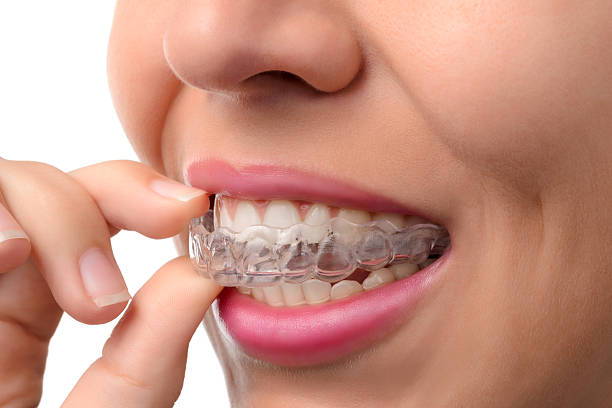
Invisalign bite ramps are raised features incorporated into certain aligners to influence how your teeth contact when you bite down. They are commonly used in deep-bite treatment, where the upper front teeth overlap the lower front teeth excessively in the vertical direction.
Typically located behind the upper front teeth, bite ramps provide a surface for the lower front teeth to contact. This can temporarily keep the back teeth from meeting fully, a change called disclusion. By changing those contacts, bite ramps help create conditions that support planned orthodontic movements.
Not every Invisalign patient needs bite ramps. Their use, placement, and timing depend on your individual bite and treatment plan. They work alongside the aligners’ tooth-moving forces rather than correcting the bite on their own.
For patients considering Invisalign in Danville, CA, Blackhawk Dental Care can explain why bite ramps may be recommended and what to expect while wearing them. Understanding their purpose can make an unfamiliar aligner feature feel like a clearer part of your personalized care.
Invisalign bite ramps are raised features formed into specific clear aligners. They change where opposing teeth contact when you close your mouth, helping support the bite mechanics prescribed in your treatment plan.
Bite ramps are part of the removable appliance itself. Unlike Invisalign attachments, they are not tooth-colored shapes bonded to your teeth. Their purpose is to modify tooth contact while the aligners are being worn.
For deep-bite treatment, bite ramps are commonly located behind the upper incisors, the upper front teeth. These are part of the anterior teeth, meaning the teeth toward the front of your mouth.
The inward-facing surface is called the lingual side, meaning toward the tongue, or the palatal side for upper teeth, meaning toward the roof of the mouth. Ramps formed into this part of the upper aligner provide surfaces for the lower front teeth to contact.
The teeth involved, ramp dimensions, and placement depend on the prescribed design. Not every patient’s aligners will have the same arrangement.
You may notice your lower front teeth meeting the ramps before your back teeth come together. This altered contact can make your bite feel different or leave you temporarily more aware of how you close your mouth.
Your tongue may also notice the raised areas behind your upper teeth. Many patients become less aware of these features as they adapt, but the experience and adjustment time vary.
Let your dental team know if the ramps cause persistent pain, irritation, or difficulty closing comfortably so they can check the aligners and their contacts.
No. Attachments help the aligner apply force to specific teeth, while bite ramps modify how opposing teeth contact.
Attachments are small composite shapes bonded to tooth surfaces. Bite ramps are features formed into the aligner that provide a planned contact surface when you bite down. Both may be included in one treatment plan, but they serve different functions.
Our guide to Invisalign attachments explains how those bonded features support tooth movement.
Some orthodontic movements benefit from temporarily changing how opposing teeth meet. Occlusion describes the contact relationship between your upper and lower teeth. When an existing contact obstructs a planned movement, it can create bite interference.
Bite ramps help manage those contacts while the aligners are worn. By directing contact onto the ramps, they can temporarily separate selected opposing teeth, creating conditions that support the movement pathway, the planned direction and sequence of tooth movement.
Whether this is useful depends on your bite and treatment goals. Bite ramps are one tool for managing these relationships within an individualized Invisalign plan.
Without bite ramps, your teeth meet according to their existing bite relationship, with the aligner material covering their surfaces. With prescribed ramps in place, the lower front teeth may contact the raised areas behind the upper front teeth before the back teeth meet fully.
This ramp contact can keep selected back teeth relatively separated while you close your mouth. The change helps provide clearance for movements included in the treatment plan.
The ramps manage contact; the aligners supply the forces that guide tooth movement.
Disclusion means separating certain opposing tooth contacts so they do not engage in their usual way. In deep-bite treatment, contact with anterior bite ramps can temporarily keep the upper and lower back teeth from meeting fully.
This separation occurs while the appliance is in place. It supports treatment mechanics rather than representing the intended final bite.
Teeth need an appropriate pathway as they change position. If an opposing tooth contacts a moving tooth in a way that obstructs that pathway, the contact may interfere with the planned correction.
Temporarily changing those contacts can help certain movements proceed with less interference. In selected deep-bite plans, separating the back teeth can also support planned changes in their vertical positions.
Bite ramps are not required for every movement or every bite problem. Your dentist evaluates which contacts need to be managed and whether ramps are appropriate for the correction being planned.
A deep bite involves excessive vertical overlap between the upper and lower anterior teeth. Some overlap is normal, so having an overbite does not automatically mean you have a problematic deep bite. Your dentist evaluates the amount of overlap, tooth contacts, and the overall bite to determine whether correction is appropriate.
When vertical correction is needed, bite ramps may help manage the contacts that influence treatment. They temporarily change where the front teeth meet and can separate the back teeth, supporting selected movements within the Invisalign plan.
When you close your teeth, the upper incisors, the upper front teeth, normally overlap the lower incisors, the lower front teeth, to some degree. In a deep bite, that vertical overlap is excessive.
The lower incisors may be largely hidden behind the upper incisors. In some cases, they may contact the gum tissue behind the upper front teeth, although this does not happen in every deep bite.
This is part of the occlusal relationship, how the upper and lower teeth meet. Your dentist assesses that relationship alongside tooth angles, back-tooth contacts, and jaw anatomy. The correction must address how the bite functions as well as how much of the lower teeth is visible.
With prescribed bite ramps in place, the lower anterior teeth may meet the raised surfaces inside the upper aligner rather than close into their original contact relationship.
That contact can stop the bite from closing as deeply while the aligners are worn and temporarily separate selected back teeth. This changes the contact conditions under which planned movements occur.
The temporary separation is a treatment mechanism. The intended result is an improved bite relationship after the planned tooth movements, rather than continued dependence on the ramps.
Deep-bite correction can involve different combinations of vertical correction, changes to the up-and-down positions of teeth. Depending on your anatomy and treatment goals, the plan may include:
For example, a plan may call for intrusion of selected front teeth, extrusion of selected back teeth, or a combination of movements. By temporarily separating posterior contacts, bite ramps can reduce opposing bite forces that might otherwise work against planned back-tooth extrusion.
Posterior settling is a related consideration as the bite develops; it is not the same as the temporary separation created by ramps. Your dentist monitors when separation is useful and when fuller back-tooth contact is needed.
Not every deep bite requires the same movements or bite-ramp design. The ramps support selected mechanics, while the complete treatment plan determines how tooth positions and contacts will be corrected.
The mechanics of bite ramps depend on where opposing teeth meet and how biting forces are distributed. Anterior teeth are the front teeth, including the incisors and canines. Posterior teeth are the premolars and molars toward the back of your mouth.
Anterior contact occurs when opposing front teeth meet; posterior contact occurs when opposing back teeth meet. Bite ramps modify this relationship by providing a raised surface for selected anterior teeth to contact while the aligners are worn.
That contact can produce posterior disclusion, temporary separation of opposing back teeth. It also changes the distribution of occlusal force, the force generated when you bite down. These changes can support particular movements prescribed in the treatment plan.
In a typical anterior bite-ramp design, the lower front teeth meet raised areas behind the upper front teeth within the upper aligner. Contact therefore shifts onto the ramps rather than allowing the teeth to close into their usual relationship.
Because the ramps create an earlier point of contact, they can limit further closure and keep selected posterior teeth apart. Biting force is then received through the anterior ramp contacts, while direct contact between opposing back teeth is reduced.
The effect depends on ramp placement, tooth positions, and how the appliance fits. Your dentist checks whether the intended contacts are occurring as treatment progresses.
When your front teeth meet the ramps first, your back teeth may feel separated or unable to come together as they usually do. This can be an intended effect of the appliance while it is in place.
The sensation reflects the changed anterior contact and resulting posterior disclusion. It does not, by itself, establish what your final bite will be.
If your bite feels unexpectedly different, the aligners do not seat properly, or you notice persistent difficulty bringing your teeth together after removing them, tell your dental team. They can distinguish the intended ramp effect from a contact change that needs assessment.
Temporary disclusion provides clearance and changes the forces acting on selected teeth. In some deep-bite plans, reducing posterior contact can help prevent biting forces from opposing planned back-tooth extrusion. Ramp contacts may also support the mechanics used for selected front-tooth movements.
The aligners guide controlled movement while the ramps help manage the contact conditions around it. As teeth change position, occlusion, the relationship between the upper and lower teeth, changes too.
Your dentist monitors this developing relationship and determines when bite ramps remain useful. Their role is to support specific movements within the plan, with coordinated tooth contacts as the eventual goal.
Bite ramps and attachments support different parts of Invisalign treatment. Bite ramps change how opposing teeth contact, while attachments help aligners deliver the forces needed for particular tooth movements.
| Feature | Bite Ramps | Invisalign Attachments |
|---|---|---|
| Location | Formed into the prescribed aligner | Bonded directly to selected teeth |
| Main Purpose | Modify tooth contact and bite mechanics | Help aligners apply forces for specific movements |
| How They Work | Provide raised surfaces that opposing teeth contact | Fit into corresponding shapes in the aligner, helping it engage the tooth |
| When Aligners Are Removed | Come out with the aligners | Remain on the teeth |
A treatment plan may need to manage opposing tooth contacts while also controlling how individual teeth move. Bite ramps can provide temporary clearance, while attachments help the aligners guide movements such as rotation or planned vertical changes.
Because these features address different mechanical needs, a patient may have both in the same aligner sequence. Their placement and timing depend on the movements and bite correction being planned.
For more about how bonded features work with clear aligners, read Invisalign Attachments Explained.
Bite ramps may make you more aware of how your teeth meet when you first wear them. You might notice pressure where the lower front teeth contact the ramps, unfamiliar raised areas against your tongue, or a sense that your back teeth do not close together as usual.
These sensations can become less noticeable as you adapt, but the experience varies. Because the ramps are part of the aligners, they come out when you remove your trays for meals. You should remove Invisalign aligners before chewing food; your bite may still feel different without them as tooth positions change during treatment.
Yes, an altered bite sensation can be expected because changing tooth contact is part of the ramps’ function. Your lower front teeth may meet the ramps first, temporarily keeping selected back teeth apart.
This can feel unfamiliar without indicating a problem. However, an expected change in contact should not be used to dismiss persistent pain or difficulty closing comfortably. Your dental team can check whether the ramps are engaging as intended.
They may affect how speech feels because the raised areas change the surface your tongue encounters behind the upper front teeth. The aligners themselves can also affect pronunciation, so any speech change may reflect the appliance as a whole.
Some patients notice a lisp or feel more aware of certain sounds, while others notice little difference. Speech may improve as you adapt, but there is no single adjustment period or guaranteed experience for everyone.
You may feel contact pressure on the ramps, along with orthodontic soreness as the aligners move your teeth. Pressure or tenderness differs from a sharp edge rubbing your tongue, a cracked ramp, or significant pain when you close your mouth.
Contact your Invisalign provider if discomfort persists, worsens, or is accompanied by visible damage or poor aligner fit. Your team can assess the cause and advise you on the next step; do not trim or reshape the ramps yourself.
No, you do not need to keep your teeth pressed against the bite ramps throughout the day. The ramps function when the prescribed teeth contact them while your aligners are being worn; continuous contact is not required.
Wear your aligners as directed and follow any specific instructions from your treating provider. Having bite ramps does not mean you should deliberately clench or repeatedly bite down forcefully.
Do not assume that harder biting will improve or speed up treatment. Bite ramps are designed to manage contact within a prescribed plan, and excessive force is not a substitute for consistent aligner wear.
Allow contact to occur naturally rather than holding your jaw tightly closed. If your provider has prescribed a particular exercise or seating technique, follow their instructions about how and when to perform it.
Ramp contact can change as your teeth move through the aligner sequence. It also depends on tracking, how closely your teeth follow the planned movements and fit within the trays.
If contact feels uneven, seems absent, or changes unexpectedly, ask your dental team to assess it. They can check tooth positions, aligner seating, and whether the prescribed contacts are occurring at that stage.
Do not try to force contact by clenching, and do not trim or reshape the ramps yourself. Your provider should determine whether the change is expected or needs attention.
Invisalign treatment is staged, meaning tooth movements are organized into steps across a sequence of aligners. As teeth change position, occlusion, the way the upper and lower teeth meet, changes too. The contacts present in your first aligner may differ from those present several trays later.
Because those relationships evolve, bite ramps may be introduced, repositioned, or omitted in later aligners according to the prescribed plan. Even when their placement looks similar, they may contact the lower teeth differently as treatment progresses.
Teeth move through a biological process in which the tissues and bone supporting them gradually remodel. Treatment planning accounts for that response by dividing correction into controlled steps rather than attempting every movement at once.
Some movements also prepare the way for others. Initial alignment may change where opposing teeth meet, while later stages address selected vertical movements or coordinate the developing bite.
Bite-ramp use follows those changing needs. Your dentist determines when altered contact is useful and monitors whether the teeth are responding as planned.
A later tray fits teeth that have moved from their starting positions. You may therefore notice a different point of contact on a ramp, a change in which teeth meet first, or a different degree of separation between the back teeth.
These sensations can reflect treatment sequencing and evolving occlusion. They do not necessarily mean a ramp is incorrectly positioned, but sensation alone cannot confirm that treatment is progressing properly.
If a new tray does not seat fully, causes significant pain, or creates an unexpected contact that concerns you, ask your dental team to check it. They can compare your current tooth positions and ramp contacts with the planned stage of treatment.
Bite ramps are one biomechanical tool, a feature used to manage forces and contacts during tooth movement. Their role is coordinated with the rest of your Invisalign plan.
That plan may also include aligner geometry, the shape designed into each tray; attachments; elastics where prescribed; IPR where additional space is indicated; and movement sequencing. Refinements, additional aligners planned after reassessment, may help address movements that remain incomplete. Each feature serves a particular purpose, and not every patient needs all of them.
Visible alignment does not reveal the full bite relationship. Two people may have similarly straight front teeth but different vertical overlap, back-tooth contacts, or tooth angles.
These differences can reflect a malocclusion, a misalignment of the teeth or an improper relationship between the upper and lower teeth. Anatomy, tooth position, and the type of correction needed all influence treatment biomechanics.
One patient may benefit from bite ramps to manage opposing contacts, while another needs different features to guide movement. As our article on why Invisalign treatment is different for every patient explains, the plan must account for how teeth fit together as well as how they look.
A digital scan provides a three-dimensional model of tooth positions and the recorded bite relationship. Your dentist uses this information, together with a clinical examination, to evaluate current contacts and plan the intended correction.
The treatment simulation maps staged movement and helps identify where bite ramps may be useful as those contacts change. Their placement and timing are reviewed within the complete plan rather than chosen solely from the appearance of the front teeth.
For patients receiving Invisalign at Blackhawk Dental Care, individualized planning and follow-up assessments help connect the prescribed features with the bite correction being pursued.
As Invisalign corrects the initial malocclusion, tooth positions and opposing contacts change. Bite ramps may remain useful during certain stages, while later stages may call for a different design or aligners without them.
During finishing, the stage focused on completing alignment and coordinating the bite, your dentist assesses how the teeth meet and whether further correction is needed. Once active treatment is complete, retention, the use of prescribed retainers to maintain corrected tooth positions, becomes the next part of care. Bite ramps are treatment features whose role is reviewed as that process unfolds.
They may be used for part of treatment or across multiple stages, depending on the prescribed plan. Some patients receive them in early aligners, while others have them introduced later.
Their appearance, adjustment, or removal should follow the planned mechanics and your provider’s assessment. A bite that feels improved does not by itself mean the ramps are ready to be discontinued.
Your provider checks aligner fit and tracking, how closely the teeth follow the planned movements. A clinical examination also evaluates tooth positions and occlusal contacts, the places where upper and lower teeth meet, both with and without the aligners as appropriate.
Where used, digital scans or other digital assessments help compare current positions with the treatment plan. These findings together show whether correction is progressing as intended and whether bite ramps still serve their prescribed purpose.
If movements or contacts differ from expectations, your provider may revise the plan before moving toward finishing and retention.
Your bite can feel different during Invisalign treatment because tooth positions and contacts are intentionally changing. Bite ramps add another temporary change by directing contact onto selected surfaces while the aligners are worn.
An unfamiliar sensation can be part of treatment, but it does not confirm that everything is progressing correctly. Your provider can assess whether a change matches the planned stage or needs attention.
Occlusion, the relationship between your upper and lower teeth, changes as teeth rotate, shift, or move vertically. A tooth that contacted its opposite number early in treatment may meet it differently several aligners later.
With bite ramps, the contact between the lower front teeth and the ramps may also change. Your back teeth may feel more or less separated as these relationships evolve.
These changes are evaluated within the full treatment sequence. A single contact sensation does not show whether the intended final bite has been achieved.
Contact your dental team if you notice:
Your provider can check aligner fit, tooth positions, and the prescribed contacts before recommending what to do next. Avoid forcing contact through hard biting or adjusting the ramps yourself, and ask for guidance before changing your aligner schedule.
Bite ramps may be recommended for selected patients whose treatment requires a temporary change in opposing tooth contacts. They are commonly associated with deep-bite correction, but the decision also depends on specific front-tooth relationships and the mechanics needed to achieve the planned movements.
For patients considering Invisalign in Danville, CA, Blackhawk Dental Care evaluates how the teeth meet before recommending treatment features. A deep bite does not automatically mean ramps are required; their use depends on the individual orthodontic plan.
Looking at your smile alone cannot reliably show whether bite ramps would be useful. Front teeth may appear straight while still having excessive vertical overlap or contacts that affect planned movement.
A smile also does not reveal the complete occlusal relationship, how the upper and lower teeth meet throughout the mouth. Your dentist evaluates those relationships alongside tooth positions and anatomy to determine whether changing contact would support treatment.
A bite evaluation examines the relationship between the upper and lower teeth, the amount of anterior overlap, and where opposing teeth contact. Your dentist considers these findings alongside the movement goals, including any planned changes in tooth height, angle, or alignment.
Digital planning helps map those movements across the aligner sequence and identify stages where altered contact may be useful. The clinical examination remains essential for assessing how that proposed plan fits your mouth.
Together, these assessments help determine whether bite ramps belong in your Invisalign plan, where they should be placed, and when they should be used.
Bite ramps change where opposing teeth contact and can create disclusion, temporary separation of selected upper and lower teeth. That separation can support planned orthodontic movements, and your treatment plan determines whether ramps are needed.
Bite ramps are commonly associated with deep-bite correction, but their use is determined by the required bite mechanics rather than a diagnosis label alone. Your provider evaluates occlusion, how your upper and lower teeth meet, to decide whether ramps would support the planned correction.
Bite ramps can feel unfamiliar because they change tooth contacts, and you may notice pressure or temporary awareness of the raised surfaces. Tooth movement can also cause soreness, but persistent or significant discomfort should be evaluated by your provider.
No, bite ramps are integrated into the aligner and modify how opposing teeth contact. Attachments are bonded to selected teeth and help the aligners apply forces for particular tooth movements.
Your lower front teeth may contact the ramps first, temporarily keeping the back teeth apart—a change called posterior disclusion. This can provide clearance for selected movements, and your provider monitors it within the overall bite-correction plan.
Bite ramps come out whenever you remove the aligners that contain them, and later trays may omit them when the prescribed mechanics change. After active treatment, retention follows to maintain corrected tooth positions, with the retainer design determined by your provider.
Ask your provider to check the contact rather than trying to alter the aligner yourself. Ramp engagement depends on changing tooth positions and aligner fit, and poor tracking may affect whether the intended contacts occur.
Bite ramps are prescribed for specific goals, such as changing tooth contacts to support planned movements. Whether they belong in your treatment depends on more than visible alignment—it requires evaluating how your upper and lower teeth meet and how that relationship needs to change.
At Blackhawk Dental Care, personalized clear-aligner planning brings those details together. If you are considering Invisalign in Danville, CA, or have questions about bite ramps in an existing treatment plan, schedule a consultation to discuss their purpose, what to expect, and how the recommended approach supports your individual bite-correction goals.